

Main Hazards in New-Energy Workshops
Multiple safety threats exist in new-energy workshops. Static electricity builds up easily during cell production and battery assembly. Electrostatic discharge may damage battery cells and even cause fire or explosion.
Splashing electrolytes and organic solvents can corrode uppers and penetrate soles, leading to chemical burns. Metal debris brings risks of falling heavy objects and sharp-object punctures. Chemical residues on floors also cause slip-and-fall accidents.
Ordinary construction-site safety shoes lack anti-static and chemical-resistant performance and are not suitable for new-energy production lines.
Selection Tips for Safety Shoes for New Energy Factory
Identify workplace risks first and prioritize combined protective functions.
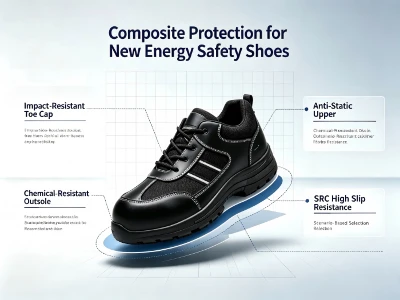
For electrolyte injection, coating and assembly workshops, anti-static performance is mandatory. Shoes must keep resistance within a safe range to discharge human static electricity and eliminate spark risks, together with impact-resistant toe caps against falling objects.
For stations exposed to electrolytes and chemicals, choose electrolyte resistant work shoes with chemical-resistant soles to block solvent penetration. Pair them with SRC slip-resistant rating to prevent slips on wet floors.
For staff passing metal security checks, lightweight composite toe safety shoes (fiberglass toe cap) are recommended to avoid triggering metal detectors and improve work efficiency.
Common Purchasing Pitfalls
Some buyers believe more functions are always better. Blindly stacking all protections leads to over-specification and higher costs.
Low-priced products without test reports often claim anti-static performance while failing resistance standards, bringing severe safety risks.
Always check official test reports and confirm compliance with EN ISO 20345:2022 standard safety footwear. Verify test data for anti-static, chemical-resistance and slip-resistance instead of trusting marketing descriptions only.

Comfort & Replacement Rules
Workers stand for long shifts in new-energy workshops. Heavy safety shoes increase foot fatigue. Lightweight styles with breathable uppers and shock-absorbing insoles are highly recommended.
Enterprises should set regular replacement rules. When soles harden or crack, or uppers suffer corrosion damage, protective performance degrades even if shoes look intact. Replace them in time.
Conclusion
Chemical resistant safety shoes for battery plant cannot adopt generic standards. EHS teams shall match proper protection for each workstation, balancing compliance, comfort and procurement cost to protect front-line workers' feet.